

For more than a decade, inflation remained low across the world. Investors and consumers alike became accustomed to stable prices, with little concern about the impact inflation could have on purchasing power. Inflation was low enough that many forgot about the long-term effects of rising prices.
However, starting in early 2021, inflation surged due to a combination of factors: extensive government money-printing, supply chain disruptions from COVID-19, and global conflict. By late 2022, inflation reached levels that many people had never seen in their adult lives. This sharp rise in inflation reminded everyone that prices can-and do-rise quickly, leaving people with less purchasing power than they anticipated.
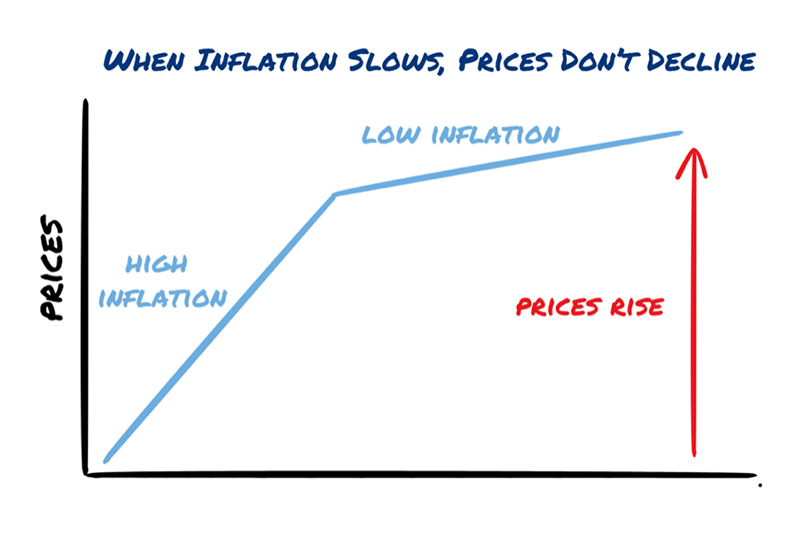
For nearly three years, consumers had to adjust their spending habits to account for significantly higher living expenses. Budgeting became more challenging as people had to pay more for everyday goods and services. While inflation has started to decline, the damage is lasting. Prices have permanently adjusted upwards, and they won’t return to previous levels even as inflation normalizes.
Why should you care?
Although inflation is no longer at the extreme levels seen in 2022, it’s crucial to understand that the price increases over the past few years are here to stay. Even if inflation slows, prices won’t magically return to what they were before. The scars of recent inflation are permanent, and the new baseline for prices is higher. This means that every investor and consumer needs to think carefully about how they spend and save their money in the future.
Firstly, consider your personal consumption habits. Are the things you spend money on truly aligned with what brings you happiness and meaning, or is there room to cut back? Living within your means has always been a cornerstone of financial independence, and it’s even more important now that inflation has pushed up the cost of everyday expenses.
Secondly, review your assumptions about inflation when planning for the future. Does your financial plan take inflation into account, or are you relying on the idea that inflation will remain low?
Finally, consider which investment assets are best suited to safeguard your wealth from the erosive impact of inflation. The true definition of money is purchasing power—what our money can actually buy. To preserve this, it’s essential to focus on investments that can consistently outpace inflation over time, or else prepare for a more modest lifestyle in the future.
Historically, global equities have been one of the most reliable tools in this regard, providing strong returns that help offset inflation’s long-term effects. Well-managed companies adapt to inflationary pressures by raising prices or improving efficiencies, ensuring their value grows over time. Over the long term, this growth has typically outpaced inflation, preserving and enhancing investors’ purchasing power.
While inflation is a formidable enemy, it’s not invincible. We can help you make appropriate trade-off decisions, adjust your strategy as needed, and ensure your portfolio remains positioned to combat inflation’s effects.
Our financial planning and investment process is designed to ensure that your financial journey ends with a resounding victory over the dragon that is inflation.