

Inflation is measured in a variety of ways, but none of them are personal to you.
The most common is the Consumer Price Index (CPI). It measures the average change in prices across hundreds of goods and services. While it’s a useful economic indicator, it rarely matches the inflation rate of your own spending. Your personal inflation rate could be, and often is, significantly different to what the headlines report.
You don’t live in an average basket of goods. You live in your life, with your own priorities and your inflation rate reflects that reality. What matters isn’t the average, it’s the rise in prices of the things you actually buy, both now and in the future.
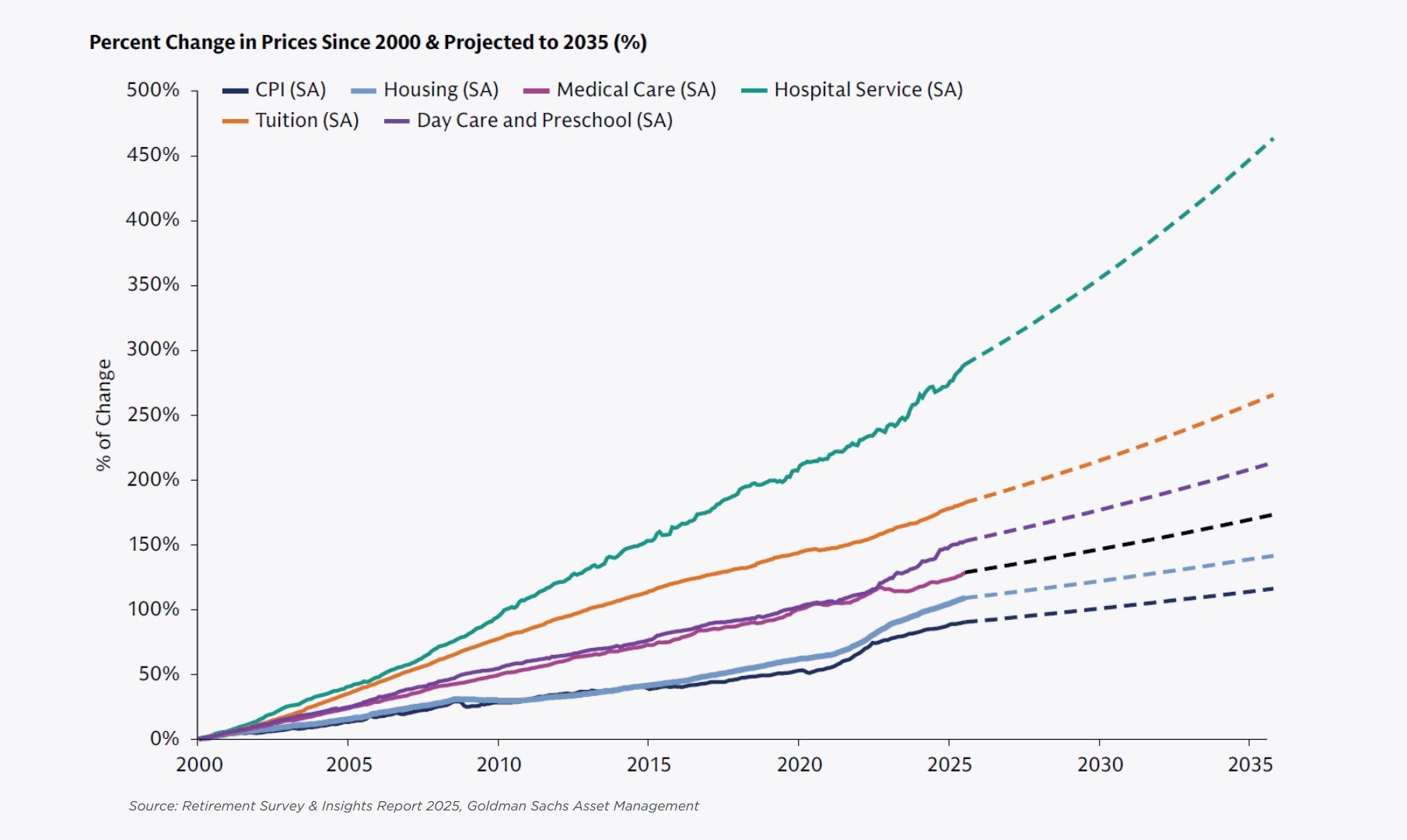
If your plans include private schooling or university education for your children, and access to quality healthcare as you grow old, you’ll need to look beyond the headline numbers to find a more realistic inflation rate.
The chart below takes a closer look at the rise in prices of some key underlying service areas over the past 25 years, and projects them onwards to 2035. While these numbers look specifically at the US, similar trends have been seen globally:
Why should you care?
Your financial plan is only as robust as the assumptions underpinning it. Use the wrong inflation rate, and you’re essentially planning for someone else’s life.
This matters most for the expenses you can’t simply cut or defer. You can choose to reduce your day-to-day expenses, or delay replacing your car, but you can’t negotiate down school and university fees once your child is enrolled. You can’t suddenly decide healthcare doesn’t matter when you need it most. These are life priorities that require accurate planning. Failure to plan properly could leave you underfunded, or needing to adjust expectations in other areas.
The uncomfortable reality is that you may need to trim your spending, or invest more of your earnings to meet all your objectives. This may not be desirable, but it’s better to have an honest plan that works, than a comfortable one that doesn’t.
Your plan should reflect your life, not somebody else’s.