
When Gareth Southgate took over the England football team in 2016, the team had become synonymous with underperformance. Talented players would arrive at tournaments and freeze when it mattered most.
Under Southgate, England were transformed, reaching two European Championship finals and a World Cup semi-final over his eight-year reign.
Southgate’s revolution wasn’t simply about tactics or fitness, it was psychological. He helped the players manage their fear of failure.
The idea was simple: the team didn’t underperform because they lacked talent, they underperformed when fear took over. Southgate rebuilt the culture so that fear became something acknowledged and managed, rather than being paralysing.
That shift changed the players’ mindset and gave them the psychological space to perform to their capabilities.
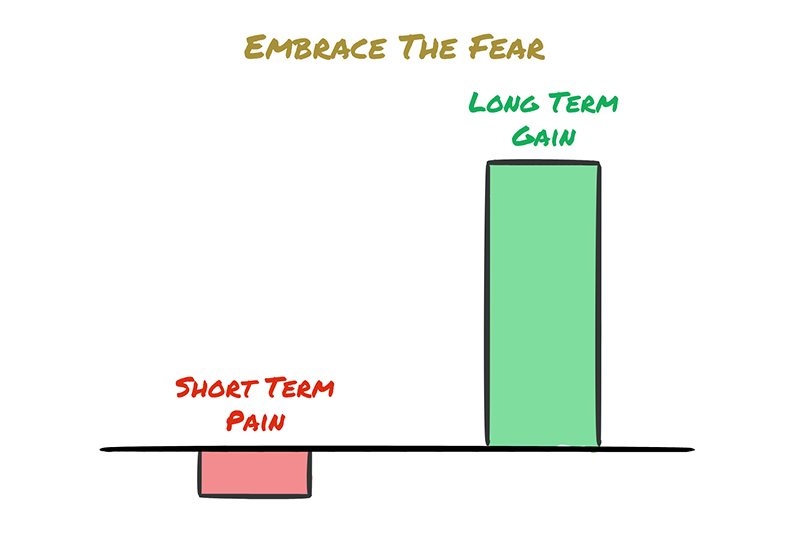
Everyone has something they’re worried about. Fear is everywhere and takes many forms. Money-related worries are one of the most common fears of all: fear of losing money, fear of not having enough, fear of getting it wrong. These can lead to paralysis or overthinking.
It is particularly prominent in investing, where research shows that investors feel the pain of losses roughly twice as strongly as the pleasure of equivalent gains. The constant noise and speculation about what you should or shouldn’t do with your money and investments, only compounds the issue.
We don’t see much value in speculating – that type of short-term thinking is usually driven by fear or greed, and often leads to poorer long-term outcomes.
One of the only certainties in investing is that time is your friend. The longer you leave your money invested, the better your chances of a successful outcome.
So next time fear starts to take hold, acknowledge that it’s normal, natural and ever-present. The key is to embrace the fear, not run from it.