

It’s easy to assume that once you’ve figured out your priorities, the hard work is over. But your priorities don’t remain the same forever. They shift and evolve as you move through different stages of life.
In early adulthood, life usually revolves around you. Priorities tend to focus on self-discovery, building a career and forming relationships. As you grow older, especially if you have children, your focus naturally shifts towards caring for, and supporting others.
Eventually, a new stage emerges. When those you’ve supported no longer rely on you as they once did, the time comes to turn your attention back to you.
Many find this last transition difficult. After years of putting others first, prioritising yourself can feel unfamiliar or even uncomfortable.
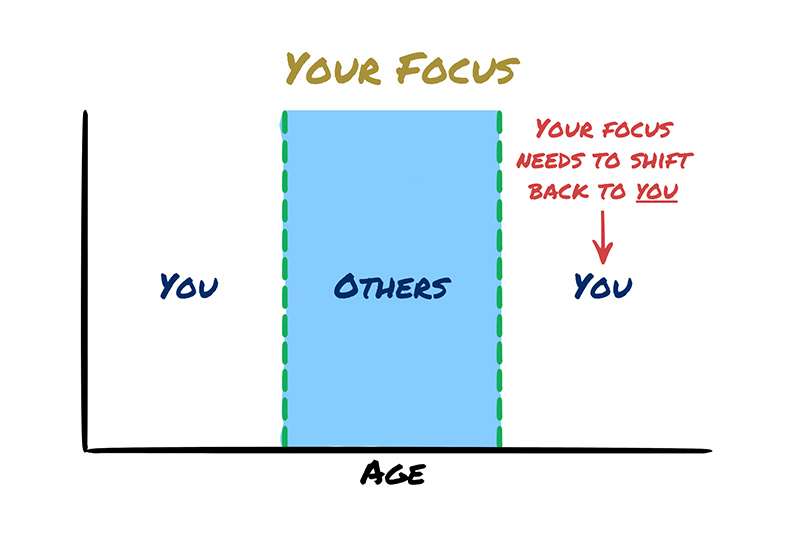
Honouring your own needs isn’t selfish, it’s an essential part of living a full and meaningful life.
You may have spent years, even decades, putting others first. But life doesn’t stand still, and eventually, work and family no longer demand so much of your time.
This isn’t about neglecting those you care for, it’s reconnecting with your own goals and aspirations at a time when you have the space to explore them.
When you give yourself permission to focus on your own priorities, you create the opportunity to thrive again, rather than simply continuing old roles and routines out of habit.
Whatever stage you’re at, take a moment to reflect: What do you truly want next?