
Close your eyes and picture yourself in 20 years. Who do you see?
If you’re struggling, you’re not alone. It’s surprisingly difficult to imagine the person you’ll become in the decades ahead. When you’re young, the idea of being middle-aged, or even older, feels impossibly far away. Yet one day, you wake up and you are that person.
Behavioral scientist Hal Hershfield’s research reveals we struggle to connect with our future selves, so much so that we treat them in the same way as we do strangers. The person you’ll become – with their hopes, regrets, and circumstances – feels as remote to you today as someone you’ve never met.
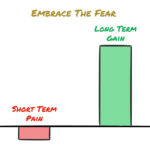
This disconnect explains why we often place more weight on the present than the future when making decisions. It’s why we’re tempted to spend today’s money rather than save it, or to skip exercise and indulge in habits our future body won’t thank us for in years to come. The pull of the present is always stronger than the voice of tomorrow.

Why should you care?
Your future self is real. One day you’ll stand in their shoes, living with the consequences of today’s decisions. Saving and investing now gives your future self more choices, less worry, and the ability to truly enjoy life fully.
But it’s not only about money. Your future self will also look back at the moments you missed: time not spent with family, trips you postponed, experiences you never made space for.
The challenge, then, is finding balance. Securing your financial wellbeing whilst also creating memories worth carrying forward. That way, when your future self looks back, they’ll see not just wealth, but a life well lived.
James Clear, author of Atomic Habits, offers elegant guidance:
“Each day, spend some time on two things:
1. Working toward something that will pay off years from now
2. Appreciating something that is happening right now”
Follow that advice, and you’ll be treating both your present and your future self with the care they deserve.