
We have no facts about the future; all we have to study is the past. While history doesn’t repeat itself, it often rhymes.
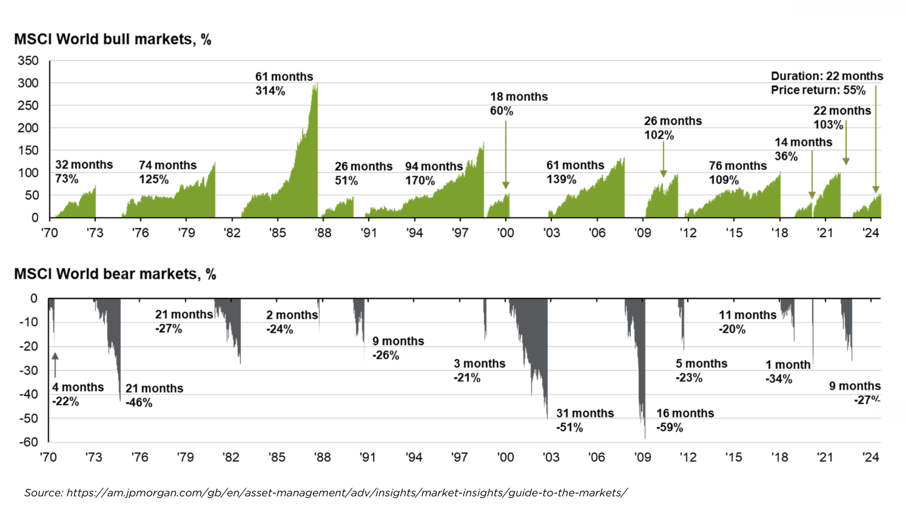
On average, the stock markets, which represent the great companies of the world, rise 75% of the time and decline 25% of the time. On average, markets drop by about 15% at some point each year—this happens as regularly as your birthday.
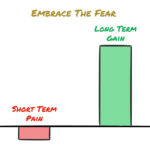
Historically, a 30% or greater drop in global stock markets tends to occur roughly once every 8-10 years. These declines aren’t flaws in the system; they’re the price of admission to participate in the greatest, most reliable wealth creation mechanism known to man.
These drops will happen to you. Your reaction to them will determine your success. Our role is to guide you through these inevitable declines and keep you focused on what truly matters. A crucial part of this process is having a well-crafted, personalized financial plan that aligns with your goals and core beliefs.
The last major, prolonged market decline was during the Global Financial Crisis of 2007-2009. The S&P 500 fell by about 59%, and other global markets saw declines exceeding 30%.
Back then, global media was more stable and balanced in its coverage. People still bought newspapers, and news outlets weren’t solely driven by clicks. You probably didn’t have a smartphone in your pocket during market drops—less than 2% of people did. Facebook was new, Twitter had only 500k users worldwide, and Instagram and TikTok didn’t even exist.
So, in a sense, the next large, temporary market decline may well be different—not in size or duration, but in the predictably hysterical coverage.
Why am I telling you this now? Because you don’t conduct a fire drill in the midst of flames; you do it calmly on a boring Tuesday when not much else is happening. So, please take some time to think about how you’ll react when the media is screaming at you, urging you into potentially destructive behavior that could sabotage your finances.