
What should you know?
Reaching retirement is not the end of your investment journey, it is simply the start of a new chapter where you begin drawing from your pot rather than adding to it.
Traditional retirement planning often meant moving away from equity-based investments into lower returning assets like cash and bonds when you stop working, aiming to minimise volatility and “protect” the value of your pot.
This line of thinking is now outdated. It comes from a time when most people retired at 65, life expectancy was shorter, and State or defined benefit (guaranteed income) pensions provided the bulk of retirement income.
Back then, personal pensions and investments were typically only a small part of the retirement income puzzle.
Today the landscape looks very different:
1. People are living longer – an adult of 65 has a high likelihood of living well into their 90s.
2. Retiring early is increasingly common, creating an even longer “third act”.
3. State benefits are shrinking, so personal savings and investments must now do more of the heavy lifting.
All of this means your money needs to continue working hard throughout your retirement.
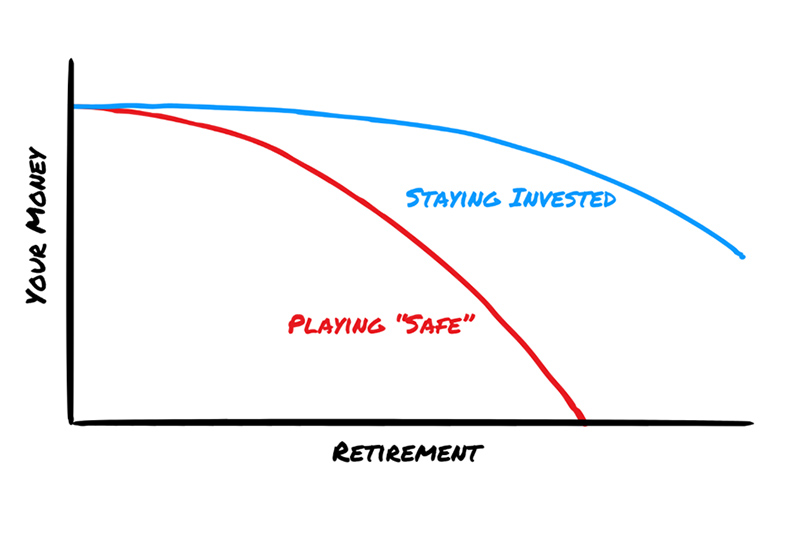
Shifting into lower returning, less volatile investments as you approach retirement can seem like the “safe” choice, but in reality, it often carries greater risks.
Many retirees today will live 30 or more years in retirement. Over such a long timeframe, inflation can have a severe impact on the value of your money.
Moving away from growth investments virtually guarantees the erosion of your pension funds, reducing your income, limiting your lifestyle, and restricting the future you’ve worked so hard to secure.
While keeping cash available for near-term income is sensible, the majority of your money won’t be needed for another 10, 20, or even 30 years. Those funds should be invested with that timeline in mind, or you risk running out of money before you run out of life.