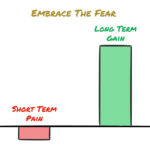

Life has a way of happening to us. Between work demands and family commitments, weeks blur into months. Meanwhile, that trip you’ve been meaning to take, the skill you wanted to learn, all of it gets pushed to “someday.”
The problem with “someday” is that it often arrives too late, when your energy has faded or the opportunity has passed.
So how do you make sure your life includes the experiences that matter most?
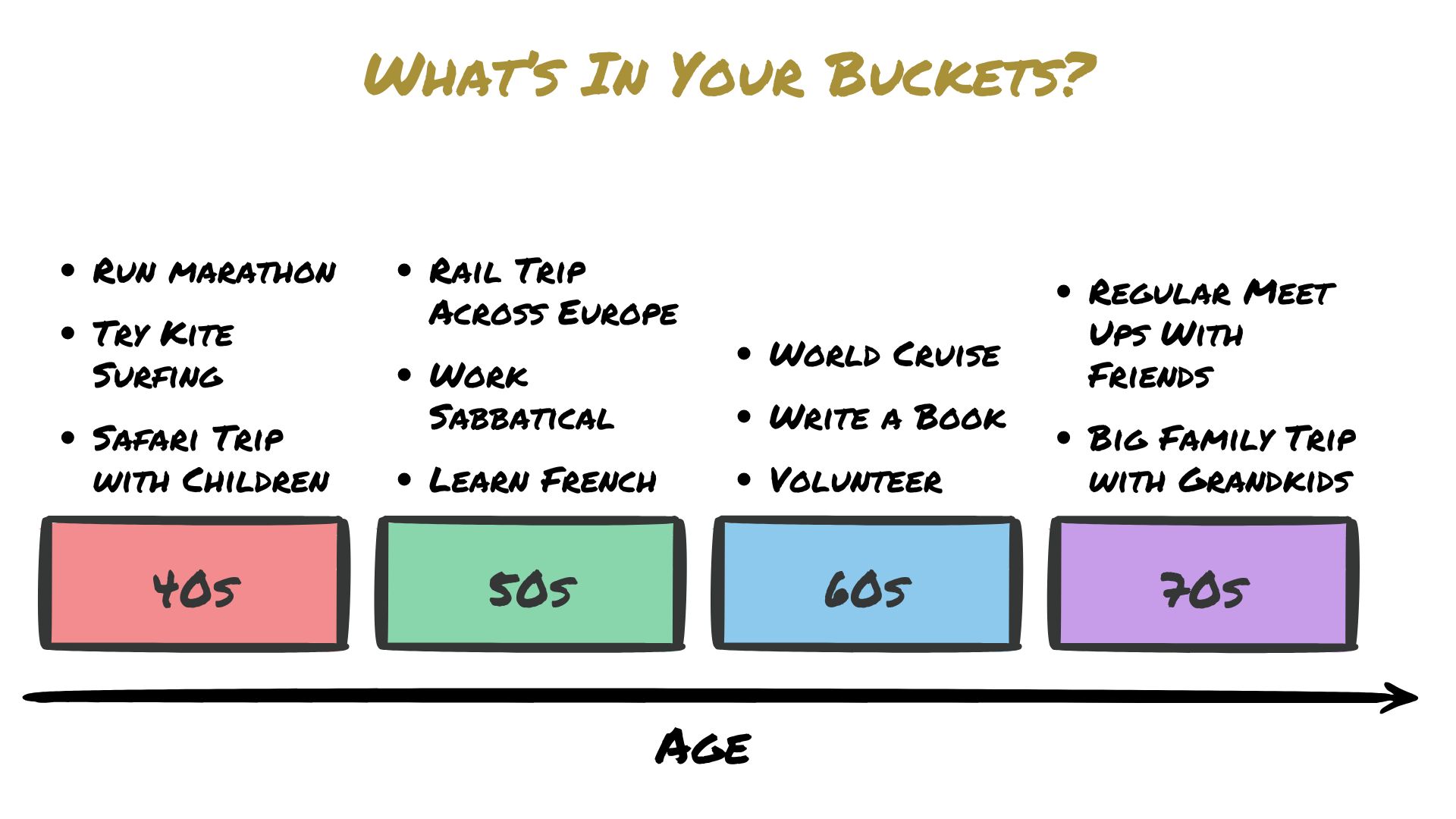
Bill Perkins, author of Die with Zero, suggests the using “time buckets.”
He recommends breaking your future into 10-year buckets – your 40s, 50s, 60s, 70s, and beyond – and deliberately assigning the experiences, activities, and goals you want to accomplish to the decade when they’ll be most fulfilling.
The idea is to map what you most want to do into the buckets that match the energy, time, and resources you’ll have during each life stage.
Some activities belong earlier in life when you have more energy and stamina. Others require the free time and resources that come later in life. And some can only be enjoyed within a specific window, or the opportunity will be lost forever.
Think about hiking Machu Picchu in your 50s or 60s, versus in your 80s. The timing transforms the experience.
By mapping to the right decades, vague wishes become firm plans.
Every meaningful experience requires some combination of money, time, and energy. The challenge is you’ll rarely have all three in abundance simultaneously.
Time buckets help you live intentionally and turn aspirations into real experiences. When an activity is assigned to a specific life phase, you can see what needs to happen when, calculate what you’ll need, and start taking steps to make these experiences a reality.
Your money is a tool for creating the life you want to live. When you use it with purpose at the right moment, you ensure you don’t miss out on what truly matters to you.